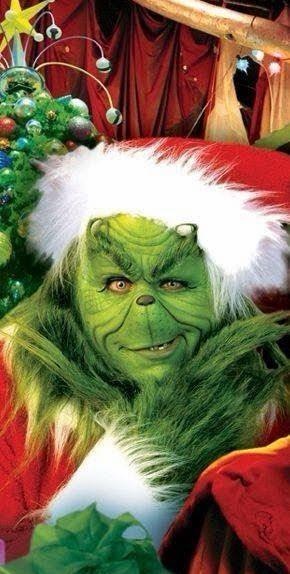
Green Grinch steals the sweets Who pudding and sugarplums Small heart wants the treats
Anita Bacha
How the Grinch Stole Christmas! is a children’s Christmas book by Theodor “Dr. Seuss” Geisel written in rhymed verse with illustrations by the author. It follows the Grinch, a cranky, solitary creature who attempts to thwart the public’s Christmas plans by stealing Christmas gifts and decorations from the homes of the nearby town of Whoville on Christmas Eve. As a result of the townspeople’s response, the Grinch realizes that Christmas is not all about money and presents.
I am one of the lucky ones who has read this absorbing #storybook published in 1957 when my dad well aware of my love for books Offered me‘How the Grinch stole #Christmas by #Dr Seuss for my birthday.
I remember with pride and nostalgia the subtle ways of my parents to encourage me and my siblings to read and write.
Christmas is not all about glitter,money and presents.
Story book by Dr.Seuss Image of Grinch cc Pinterest
Footsteps is the prompt of #TankaSocietyofAmerica for this week #TankaThursday and #TankaPoem
I was walking to the bakery to buy bread for breakfast and was deep in thought.Suddenly I heard the sound of my footsteps crunching fallen brown leaves 🍂. Simultaneously my Apple in my jacket pocket notified me of the above prompt.
I immediately jot down the above short piece on my iPhone and posted it as quick as lightning ⚡️
My feelings when I did so were ‘ I was living the peace and quietness of an Autumn walk away from the maddening crowds interrupted unduly by my boots, fallen leaves and my iPhone.
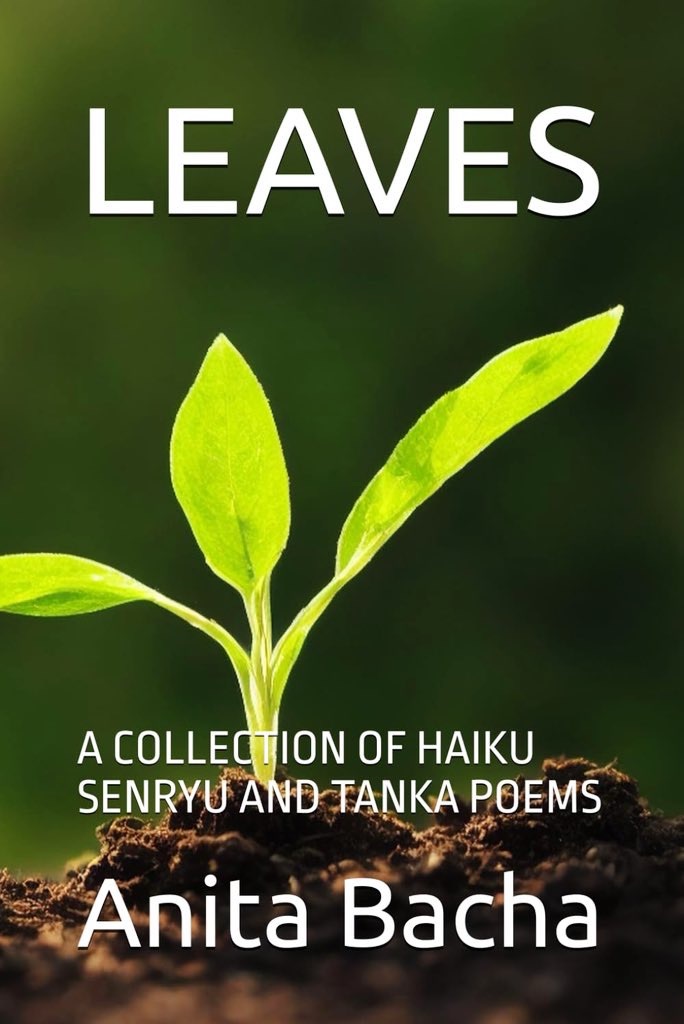
I am glad to announce that I have just added a new release to my repertoire –
LEAVES
It’s a collection of short poems,namely haiku,senryu and tanka written fondly with you in mind.
I picked up my quill after a long illness to compile this collection of haiku, senryu and tanka poems which, has been a major part of my recovery.Writing every day, no thrice a day, is my secret potion. On a naughty note, I wanted to prove to my ophthalmologist that writing won’t make me blind.
What is Leaves about?
Choosing a title for a poetry book is not an easy task especially when it comes to a collection of short poems.
One morning, I was gazing at the overcast sky when a yellow leaf fell at my feet, followed by another, yet another. Deeply marveled and inspired by Mother Nature’s cycle of life, I have named my new collection of short poems, LEAVES. Each poem molded, shaped, colored differently is a leaf from Mother Nature’s Notebook.
This collection of traditional and modern haiku, senryu and tanka is divided in three parts. The first one consists of haiku unfolding the four seasons of the year, starting with summer and ending with winter. The second comprises senryu and, the third and last one includes tanka.
Haiku is a Japanese poem of traditionally seventeen syllables in three, short, unrhymed lines. Nature themes and imagery evoking a specific season of the year are the traditional focus of haiku poetry.
Haiku developed from the hokku, the opening lines of a longer poem known as tanka, an ancient form of poetry that consists of 5 lines in a 5/7/5/7/7 syllables count form. The tanka poem is traditionally about seasons, nature and emotions. Senryu is another short form Japanese poetry similar to haiku in construction with three lines and seventeen syllables count. Senryu, however, tend to be about human foibles; they are often cynical and darkly humorous. Haiku is more serious.
Whereas traditional haiku and senryu poets observe strictly the 5/7/5 syllables pattern, modern poets try different syllables count and formats to achieve a more minimalist style.





 Anita Bacha