Tailspin autumn wind, Dry leaves crush under my boots, Spring is far away, Olive trees in full blossom, Pedicured feet in flip flops.
Artwork Olive Trees – Season Autumn Spring -André Claude Monet, 1884.
Dear friends and readers, This is my first tanka poem. I hope that you enjoy it. What is a tanka poem? One may ask.Is it similar to the haiku poem ? A tanka or short poem originates in Japan just like the haiku poem.It is a free verse, 31 syllables poem written in five lines. The basic structure of the tanka is 5-7-5-7-7, whereas the haiku consists of three lines and 17 syllables in a 5-7-5 format. Furthermore, the third line shifts from the imagery in the beginning lines to a reflective metaphor in the closing lines
Many more tanka poems to come for your eyes only. Thank you for reading.
Every moment is a day Every day is a moment Life brings joy et al and its share of downfall Life is empty without its spontaneity As we grow old our perspectives evolve Autumn’s rose petals fall for spring buds to sprout Life doesn’t mean to possess life means to let go
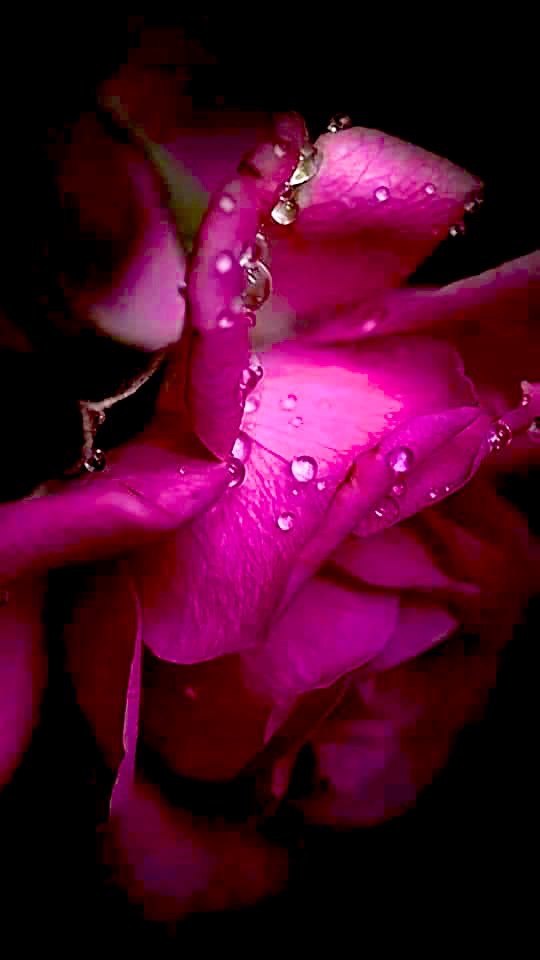
Why ask the rose?
From the bud to the sparkling full bloom
From the full bloom to the withering rose, the rose tells her story
Each stage of our life has a story to tell similar to the rose
Fervor of first kiss
Innocent as a mistake
Blush of a pink rose
Ardor of first crush
Burning fire rising to flame
Whiff of a red rose
A single pink rose
In my lone winter garden
Rich with love fragrance
Wanting to flower
Like the morning rose
Living life anew
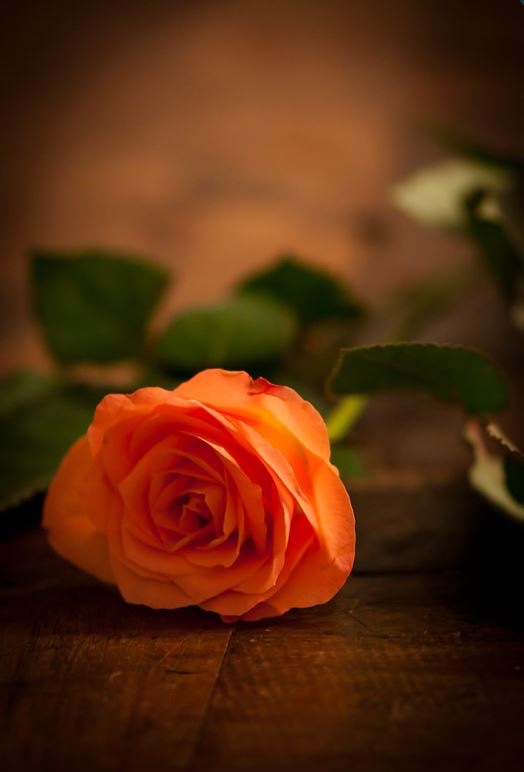
A burnt orange rose
Pressed between crumbling pages
Old relationship
Cyclone aftermath
Inundated flower beds
Petals soak in tears
Cyclone is blowing
Roses lamentably fall
Colored waterfalls
Thank you for viewing and for reading, my dear friends and readers!
Spring is the season we most look forward to in London specially after a rigid and cold winter.The budding of flowers is soothing.The air is full of promises as smiles flower on lifeless faces.Spring is my favorite season of the year, and yours too.
Spring here coincides with Sakura, the blooming of the cherry trees, in Japan. The transient yet lovely blossoms that appeal to the heart of every poet have greatly inspired me too . Enjoy!
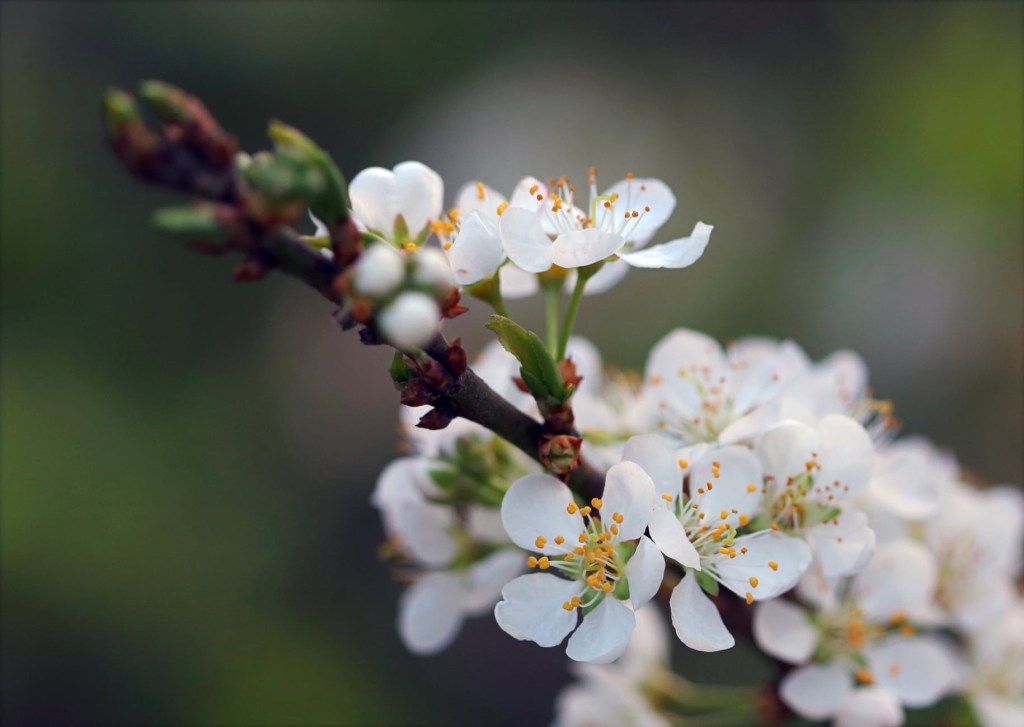
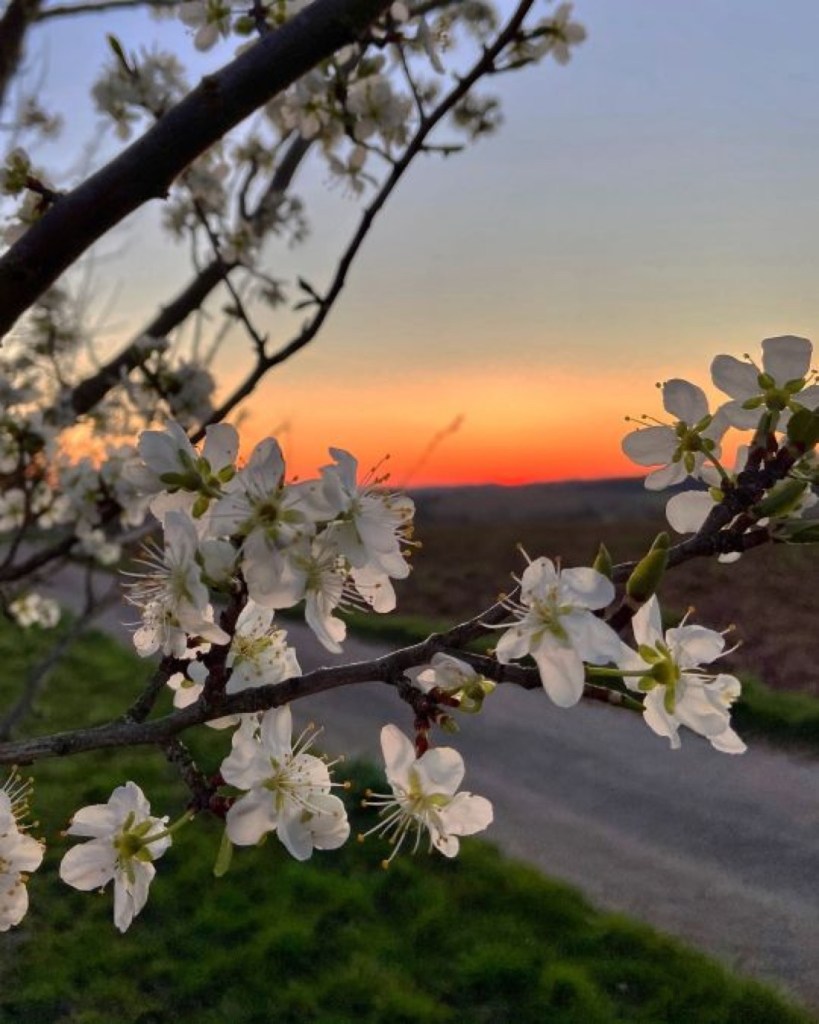
I am sharing my haiku ‘The plum tree blossoms’ selected as haiku of the week by Japan Society London on 19/04/22 and two other included in their esteem website
a person should be honest in the first instance
no matter how harsh the truth is
Once, the mother of Mahatma Gandhi, Putlibai Gandhi was fasting and she let it be known that she would break the fast only when the she heard the song of the cuckoo.
She waited a long time but, alas, the cuckoo did not sing. Gandhi Ji was a small child then and he felt very sad that his mom would not take a morsel of food.
A brilliant idea crossed the mind of the adoring child. He rushed to the back garden and imitated the song of the cuckoo. He came back to the house, went up to his mom and said- ‘Maa, you can eat now; the cuckoo has sung!’
His mom unfortunately would not be fooled and she got very angry. ‘I am ashamed to have a son like you!’ she said. ’How can you speak such a lie? A lie is a sin!’ she added.
Gandhi Ji was heartbroken. He realized that his mother was extremely upset. He also understood that he had made a big mistake by lying to his mother. From that moment, he vowed that he would never tell a lie in his whole life. He never did.
Mother is, undoubtedly, our first and most important teacher. The bond of love between mother and child is sacred. It is the purity of this relationship that makes every lesson, that we learn from our mother, a lesson for life. We may forget what the school master teaches but, not what is taught by our mother.
Gandhi believed in honesty. Trying to conceal a lie may require a person to lie even more and this becomes a vicious circle. Therefore, a person should be honest in the first instant, no matter how harsh the truth is.
A Pink Moon rises
Plum tree blossoms like ink marks
In a poetry book
Hi friends, writers, and readers,
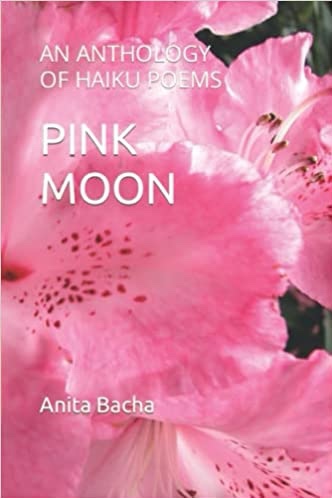
I am glad to share with you the publication of my new book, PINK MOON, an anthology of haiku poems. I have made a random choice of 365 out of 700 three lines poems written over a space of two years, thinking fondly that you may wish to read one poem a day during the year.
What prompted me to write the book?
Haiku is traditionally a Japanese poem consisting of three short lines that do not rhyme.
The erudite consider haiku to be more than a style of poetry. It is a way of observing the physical world and seeing something beyond, more profound, close to the very nature of existence, and to an essential vision of life.
Traditional Japanese poetry consists of three lines that contain a kireji, or cutting word, 17 syllables on a 5,7,5 pattern, and a kigo, or seasonal reference.
Similar poems that do not adhere to these rules are generally classified as senryu.
Senryu is about the human heart and spirit, expressions of life, and love. It is similar to haiku except that haiku is mainly about nature.
I became enamored with haiku poetry in 2018. In that year, I was at the London Book Fair to exhibit my debut poetry book ‘Soul Poetry’. I surprisingly came across a work by the Japanese poet Matsuo Basho. I fell in love with his haiku poems at first glance. I saw magic, sound, and music in his words –
Early morning walk,
Tree leaves bristling,
A lovely sunrise
Matsuo Basho (1644-1694) was the most famous poet of the Edo period in Japan.
During his lifetime, Basho was recognized for his work in the collaborative hakai no renga form; today, after centuries of commentary, he is recognized as the greatest master of haiku.
It took me a long time to learn the art of writing haiku. It demands faith, meditation, focus, creativity, love of nature, and mastery of words. All these, coupled with awe at the beauty of existence, I have jotted down these writing prompts in the traditional form of haiku, observing as closely as I can the syllable count, three lines, and a seasonal reference.
I hope my readers appreciate my haiku poems. A globetrotter, I write them as I soar on my quill in the open sky.
Many have lost a loved one, a family member or a friend as a virus reigns supreme in the world. As all bad things have a good side, human beings realize that we are all one,irrespective of our faith, religion, color of skin,likes and dislikes. COVID-19 does not choose; it doesn’t prefer one to the other. It’s a killer. It destroys all humans.
With the above in mind, I woke up this Saturday morning and picked up my pen , a piece of paper and I wrote my new year resolution. Yes, I have only one resolution. I recall when I was a kid, my mom would ask, every new year day –
Ani, have you written your new year resolutions, my child ?
Writing the new year resolutions was a tradition in our family, among the other traditions which we followed ceremoniously, too many to mention here. The only family tradition that remains after I adopted modern thoughts and life style is to jot down the new year resolutions.
A new year resolution is a traditional custom in which we resolve to continue good practices, change a bad habit or behavior, decide to achieve a personal goal, or improve family relationships and lead a happy life.
My new year resolution comes straight from my heart. It is to continue to see beauty in all things and god in all beings.
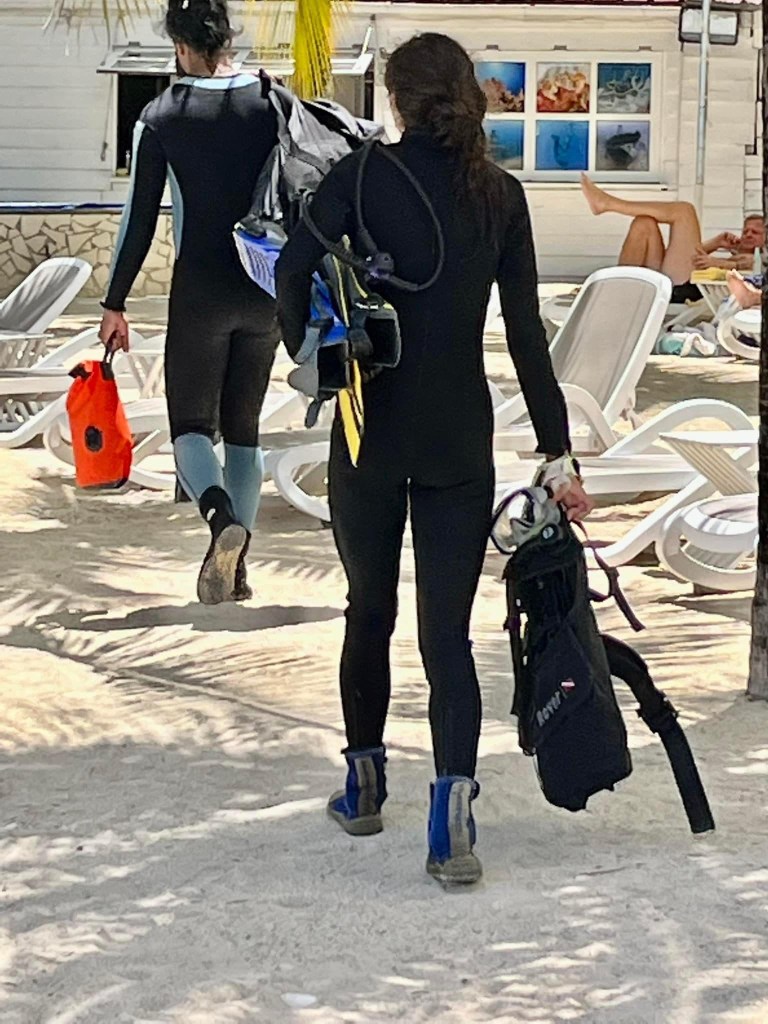
My son Yogen and my granddaughter Yana after a session of scuba diving in Mauritius. They arrived from the United States of America two days ago, now that the borders are open after two years of restrictions on travel by all the countries in the world to control the spread of the pandemic Covid-19.


















 Anita Bacha